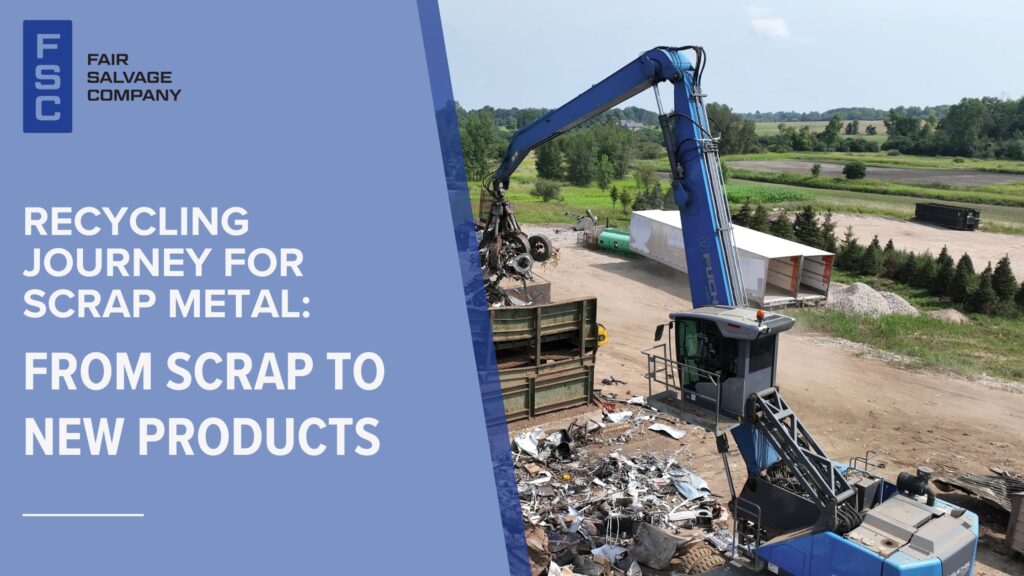
Most people see scrap metal as the end of the line. A broken tool, an old appliance, or a pile of leftover material from a job site often gets pushed aside and forgotten.
But in reality, that is just the beginning.
The recycling journey for unused metal is a powerful process that transforms discarded materials into valuable new products. For homeowners, contractors, farmers, and businesses across Mid-Michigan, understanding this journey does more than satisfy curiosity. It shows how everyday, leftover metal can become a reliable source of income while supporting a more sustainable future.
At Fair Salvage, we guide customers through this process every day, helping them turn scrap metal into cash while contributing to the circular economy.
Why the Recycling Journey for Metal Matters
Metal recycling is not just about clearing space. It is about creating value from materials that would otherwise go to waste.
When you recycle metal:
- You generate immediate cash from unused materials
- You reduce landfill waste
- You support manufacturing industries that rely on recycled inputs
- You contribute to a more sustainable economy
For many businesses and individuals, the biggest shift is realizing that unused metal is not waste. It is an asset.
Step 1: Collection of Scrap Metal
The recycling journey for metal begins at the source. This could be your home, farm, construction site, or industrial facility.
Common sources include:
- Old appliances and household items
- Construction and demolition debris
- Farm equipment and scrap metal piles
- Manufacturing byproducts
If you are unsure what qualifies as recyclable metal, this guide is a helpful starting point:
https://fairsalvage.com/what-can-i-recycle-for-money/
At this stage, the focus is on identifying and gathering materials that have value.
Step 2: Sorting and Separation
Once metal is collected, the next step is sorting. This is where value is either preserved or lost.
Separating metals correctly ensures they are processed and priced accurately.
Key categories include:
- Ferrous metals like steel and iron
- Non-ferrous metals like aluminum, copper, and brass
Non-ferrous metals are typically more valuable, which makes proper separation essential.
This is also where simple techniques, like using a magnet, can make a big difference. If it sticks, it is likely steel. If it does not, it may be a higher-value metal.
Step 3: Processing and Preparation
After sorting, metal is processed to prepare it for recycling.
This may include:
- Cutting large items into manageable pieces
- Shredding materials for easier handling
- Removing contaminants
At Fair Salvage, this step is handled efficiently to ensure materials are ready for the next stage in the recycling journey for scrap metal.
For customers, proper preparation before bringing in unused metal can help maximize value and streamline the process.
Step 4: Melting and Refining
Once processed, scrap metal is sent to mills and foundries where it is melted down.
Each type of metal is handled separately to maintain quality. During this stage:
- Impurities are removed
- Metals are refined to meet manufacturing standards
This step transforms metal into raw material that can be reused in production.
Step 5: Manufacturing New Products
After refining, the recycled metal is used to create new products.
Examples include:
- Steel beams used in construction
- Aluminum cans returned to store shelves
- Copper wiring used in electrical systems
- Automotive parts and machinery
This is where the recycling journey for metal comes full circle. Materials that were once discarded are now back in use, often in entirely new forms.
Real-World Examples of Repurposed Metals
Understanding how metal becomes new products helps illustrate its true value.
Steel
Old farm equipment and structural steel can be melted down and turned into new building materials, supporting construction projects across the country.
Aluminum
Recycled aluminum cans can be processed and returned to shelves as new cans in a matter of weeks, using significantly less energy than producing new aluminum.
Copper
Copper from wiring and plumbing is reused in electrical systems, maintaining its high value due to consistent demand.
A Customer Story: From Metal Piles to Clean Operations
One local contractor came to Fair Salvage with a common problem. Metal was piling up at job sites, creating clutter and safety concerns.
After implementing a simple sorting system and scheduling regular pickups, they transformed their process.
The results:
- Cleaner, safer job sites
- Improved efficiency
- Increased revenue from properly sorted materials
What once felt like a burden became a streamlined part of their operation.
How Recycling Supports Sustainable Manufacturing
The recycling journey for metal plays a critical role in sustainability.
Recycling metals:
- Reduces the need for mining raw materials
- Uses significantly less energy than producing new metals
- Lowers greenhouse gas emissions
- Conserves natural resources
For businesses and individuals, this means that recycling is not just financially beneficial. It is also environmentally responsible.
How Fair Salvage Simplifies the Recycling Journey
At Fair Salvage, our goal is to make the recycling journey for metal as simple and profitable as possible.
We provide:
- Transparent pricing with real-time updates
- Fast and efficient service
- On-site metal container programs for businesses
- Personalized support from experienced buyers
Learn more about our services here:
https://fairsalvage.com/recycling-services/
You can also find the nearest location here:
https://fairsalvage.com/locations/
And stay updated on pricing here:
https://fairsalvage.com/pricing/
Final Thoughts on the Recycling Journey for Metal
The journey of metal does not end when it is discarded. In many ways, that is where its value truly begins.
By understanding the recycling journey for metal, you can:
- Recognize the value in your materials
- Take steps to maximize your returns
- Contribute to a more sustainable future
Whether you are clearing out a garage, managing a farm, or running a business, scrap metal recycling offers a simple and effective way to turn unused materials into something meaningful.