Most Valuable Scrap Metals
One of the first questions new and experienced metal recyclers alike ask is simple: what metals are worth the most in recycling? Whether you are a homeowner cleaning out a garage, a farmer upgrading equipment, or a contractor managing job-site materials, knowing which materials hold the most value can make a meaningful difference in your payout.
At Fair Salvage Company, we help Mid-Michigan sellers understand not just what metals are valuable, but why. With locations in Clare, Chase, and Montcalm, our team sees firsthand how market demand, preparation, and transparency all affect what sellers earn.
This guide breaks down the most valuable scrap metals, explains the difference between ferrous and non-ferrous materials, and offers practical advice on how to maximize the value of what you bring in.
Understanding Ferrous vs. Non-Ferrous Metals
Before identifying the most valuable scrap metals, it helps to understand how metals are categorized.
Ferrous Metals
Ferrous metals contain iron and are magnetic. These include steel, cast iron, and many appliances and structural materials. Ferrous metals are recycled in large volumes and play a critical role in construction and manufacturing.
While ferrous metals are essential, they typically pay less per pound than non-ferrous metals because they are more abundant and heavier.
Non-Ferrous Metals
Non-ferrous metals do not contain iron and are not magnetic. These metals are usually lighter, less abundant, and more valuable per pound.
Non-ferrous metals consistently rank as the most valuable scrap metals due to their demand across industries like energy, transportation, electronics, and infrastructure.
Most Valuable Scrap Metals You Should Know
When sellers ask what metals are worth the most in recycling, several materials stand out year after year.
Copper: The Top Performer
Copper is widely considered the most valuable scrap metal commonly recycled. Its unmatched electrical conductivity makes it essential for power grids, electric vehicles, data centers, and renewable energy systems.
Common sources of copper include:
- Electrical wire
- Plumbing pipe and tubing
- Motors and transformers
Demand for copper continues to rise, which helps support strong pricing. You can learn more about how pricing transparency affects seller trust in our article on transparent scrap pricing builds trust.
Aluminum: Lightweight but High Demand
Aluminum is another high-value non-ferrous metal. It is lightweight, corrosion-resistant, and endlessly recyclable without losing quality.
Common aluminum scrap includes:
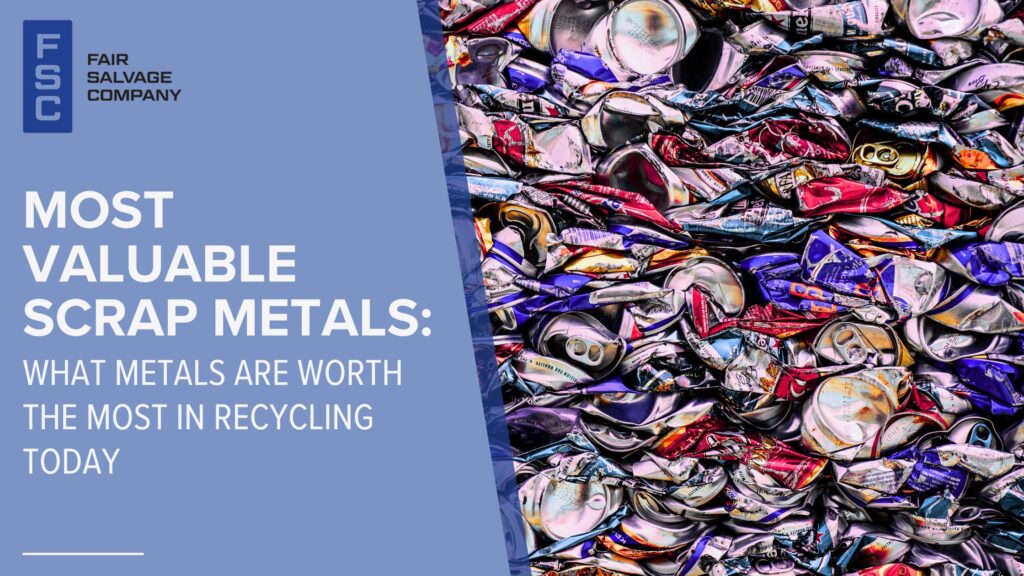
- Beverage cans
- Siding and gutters
- Window frames
- Automotive components
Because aluminum is used heavily in transportation and packaging, demand remains steady even during slower economic cycles.
Brass: Often Overlooked but Valuable
Brass is an alloy of copper and zinc and is commonly found in plumbing fixtures, valves, fittings, and decorative hardware.
Brass often surprises sellers with its value. While it may not match copper pound-for-pound, it remains one of the most valuable scrap metals when separated properly.
Why Steel Still Matters Even If It Pays Less
Steel is the most commonly recycled metal in the world. While it does not command the same per-pound prices as copper or aluminum, volume matters.
Steel scrap includes:
- Structural steel
- Farm equipment
- Appliances
- Car bodies
At Fair Salvage, steel remains a core material because of its importance to the recycling economy and the large quantities available locally.
As Jon Fair explains:
“We take steel, copper, aluminum, brass, batteries, appliances, basically anything metal. But we don’t take propane tanks unless they’re fully emptied and have the valve removed.”
Safety and proper preparation always come first.
Demand Trends That Affect Scrap Metal Value
Scrap metal prices are not static. They move with demand from manufacturers, mills, and global markets.
Key demand drivers include:
- Infrastructure investment
- Manufacturing and re-industrialization
- Electric vehicles and renewable energy
- Technology and data center expansion
Non-ferrous metals benefit the most from these trends, which is why they consistently top the list of most valuable scrap metals.
Why Preparation Can Change Which Metals Are “Most Valuable”
Even the most valuable scrap metal can lose value if it is not prepared correctly.
Jon Fair highlights a common issue for industrial and manufacturing unused metals:
“For manufacturers, keeping turnings separate is huge. A pile of steel turnings is worth less if it’s mixed with brass.”
Separation protects value. When non-ferrous metals are mixed with steel or contaminated with non-metal materials, they are often downgraded and paid at a lower rate.
A Real-World Observation From the Fair Salvage Yard
A Fair Salvage team member recently worked with two contractors bringing in similar loads. One separated copper, aluminum, and steel. The other combined everything for convenience.
The result was clear. The separated load generated a noticeably higher payout, even though both loads weighed nearly the same.
Understanding which metals are most valuable is only part of the equation. Handling them correctly is just as important.
Why Transparency Matters When Pricing Valuable Scrap Metals
Knowing which metals are valuable only helps if pricing is clear and honest. Fair Salvage publishes live pricing so sellers can check rates before loading their truck.
Transparency builds trust and removes guesswork, especially when dealing with higher-value non-ferrous metals. Sellers can review current pricing anytime at https://fairsalvage.com/pricing/.